
Connected data environment for a fragmented business system

Business information was distributed across ERP, CRM, accounting, production, warehouse and other systems, making it difficult to use consistently across workflows and reporting. We designed a connected data environment that brings relevant information together, prepares it for automation and AI, and keeps access aligned with business roles and security requirements.

Connected data environment for a fragmented business system

Connected data

Relevant information from different business systems can be connected and used consistently across workflows.

One view across systems

Business information can be brought together from ERP, CRM, accounting, production and warehouse systems.

AI-ready information

Connected and prepared data creates a foundation for reporting, automation and AI initiatives.

From fragmented data to a connected environment

Fragmented business information

Companies often accumulate business data across multiple systems as their operations grow.

Customer information may live in a CRM, operational data in an ERP, financial information in accounting, and production or warehouse data in separate systems.

The problem is not necessarily the amount of data. The problem is that the information can become fragmented, inconsistent and difficult to use across business processes.

This creates challenges when teams need to:

  • Combine information from different systems
  • Support operational workflows
  • Prepare reliable reports
  • Exchange data through EDI
  • Migrate legacy data to modern environments
  • Prepare company information for AI initiatives
  • Control access to sensitive business information

The objective was to create a more connected data environment without requiring the company to replace every existing system.
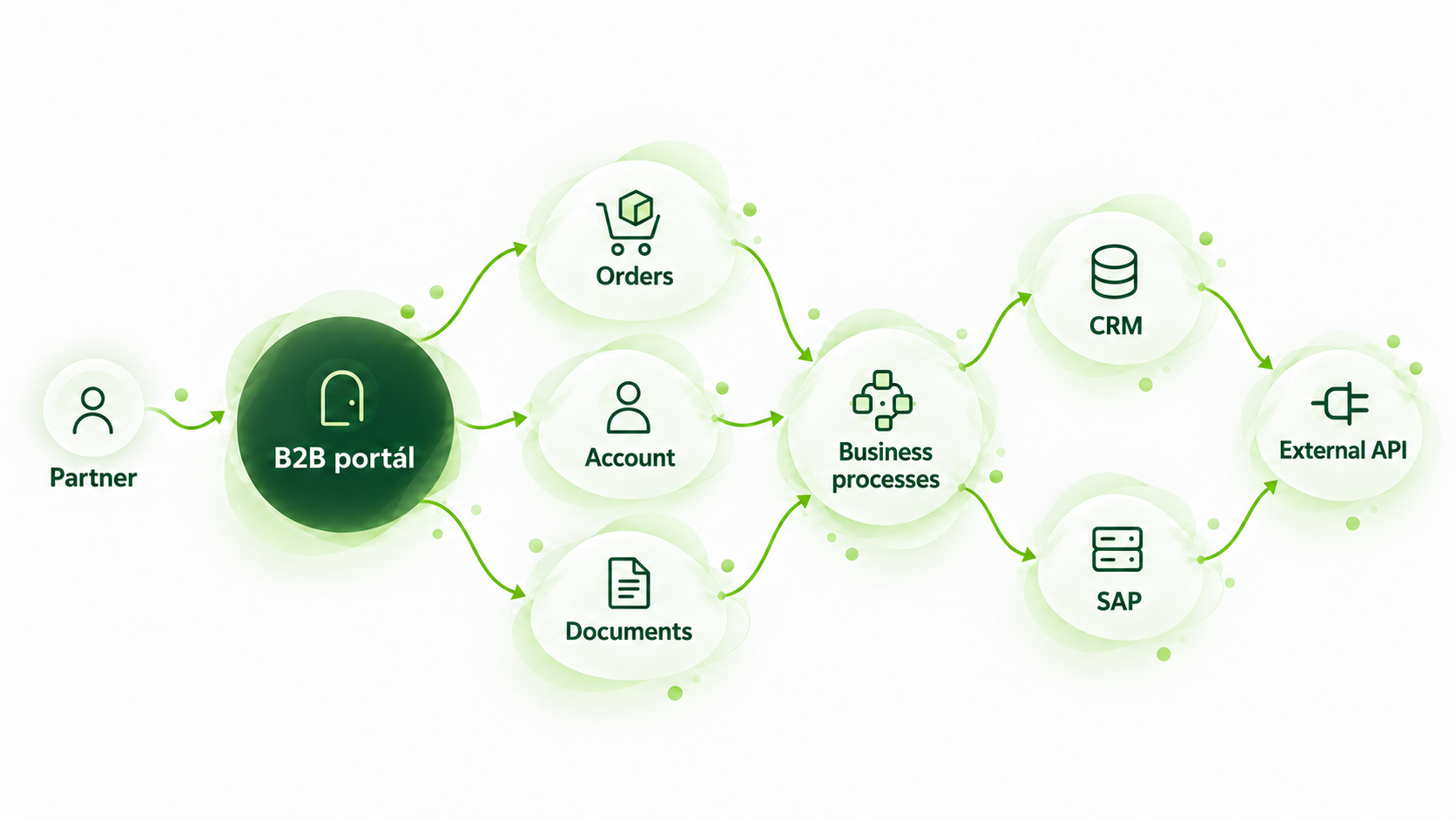
Connected data architecture

We designed a company-data architecture that connects relevant internal systems through available APIs and other appropriate interfaces.

The approach covers data migration, data integration, data preparation for AI, and reporting, big data and EDI processes.

The exact architecture is defined according to the company's existing systems, data sources, processes, interfaces and security requirements.

From fragmented data to a connected environment

Key features

1

Data integration across ERP, CRM, accounting, production and warehouse systems

2

Data migration to cloud and modern systems

3

Data preparation for AI to improve consistency and usefulness

4

Connected business workflows using information from multiple sources

5

Reporting and decision support based on connected business information

6

EDI data processing

Result

Before

Business information was distributed across separate systems, making it harder to combine, manage and reuse consistently.

After

Relevant information can be connected across systems and made available where it is needed – in workflows, reporting, decision support and AI initiatives.

Key outcomes

  • Data from different systems can be connected in relevant workflows
  • Business information becomes more usable across teams
  • Data quality and consistency can be addressed before AI implementation
  • Existing environments can be modernized or migrated to the cloud
  • Access can reflect business roles and security requirements
  • Data can support reporting, decision-making and EDI
  • Connected information creates a foundation for further automation

These outcomes describe the service's capabilities. Project-specific measured results are not published.

Key takeaway

The most important decision is to connect and prepare business data before trying to automate everything around it. A well-structured data foundation makes the same information more useful across operational workflows, reporting, integrations and AI initiatives.

Book a consultation

Frequently asked questions

Which business systems can the connected data environment bring together?

Business information was distributed across ERP, CRM, accounting, production, warehouse and other systems, making it difficult to use consistently across workflows and reporting. We designed a connected data environment that brings relevant information together, prepares it for automation and AI, and keeps access aligned with business roles and security requirements.

How is information made usable in reporting and operational workflows?

The exact architecture is defined according to the company's existing systems, data sources, processes, interfaces and security requirements.

How does the architecture prepare company information for AI initiatives?

Relevant information can be connected across systems and made available where it is needed – in workflows, reporting, decision support and AI initiatives.

How is access to sensitive business information considered in the architecture?

Relevant information can be connected across systems and made available where it is needed – in workflows, reporting, decision support and AI initiatives.

Technologies

ERP CRM Accounting systems Production systems APIs Cloud systems EDI